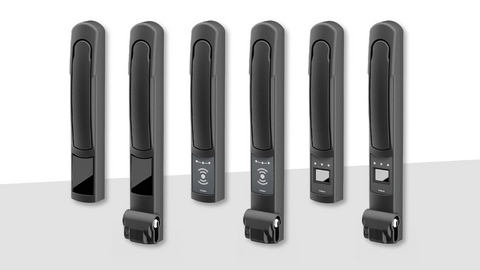
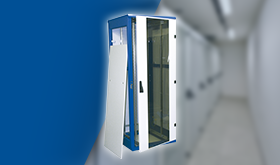
Schrack Technik offers the TANlock product range for secure server cabinet access and control. Electromechanical locks, handles, and accessories provide scalable solutions for individual cabinets or entire server rooms. TANlock can be easily integrated into existing IT infrastructures, uses standard protocols, and requires no additional software. This ensures compliance with the NIS2 directive while reliably protecting your critical IT infrastructure.
Your special advantages and features
- Scalable access control system – suitable for individual server cabinets up to complete server rooms.
- Easy integration into existing IT infrastructures thanks to standard-based interfaces (TCP/IP, LDAP, MS ActiveDirectory, SNMP, WebService).
- Flexible compatibility with various cabinet manufacturers and optional IP65 protection for demanding environments.
- Simple installation without additional hardware or software, reducing setup time and complexity.
- High-quality powder coating for durable locks and reliable security in professional server rooms.
Zugangsschutz zu kritischen Infrastrukturen wird durch Normen, Gesetze und Richtlinien wichtiger denn je. TANLock ist ein intelligentes, elektromechanisches Schließsystem für Serverracks und Schaltschränke. Erfahren Sie mehr!
Physical security for server and network cabinets
Access control for cabinets is a key component of physical IT security. Both server cabinet protection and network cabinet protection are essential to prevent unauthorized access, tampering, and environmental impacts. With electronic and electromechanical cabinet handles/levers, server cabinet resilience and rack security can be reliably enhanced. Modern solutions provide physical cabinet protection and strengthen the resilience of critical infrastructure, especially in highly sensitive IT environments.
Cabinet Monitoring and Physical Cabinet Protection
Cabinet locks, outdoor locks, and cabinet monitoring systems provide additional security for server rooms, racks, and outdoor cabinets. The combination of server cabinet monitoring and network cabinet monitoring allows access to be controlled at all times and unauthorized interventions to be detected immediately. Special cabinet handles for e-charging stations ensure these infrastructures are also optimally protected, guaranteeing safety for charging stations. Integrating access control for server cabinets ensures that only authorized personnel can access critical IT components.
Resilience of Critical Infrastructure
A holistic approach to physical security includes the planning, installation, and monitoring of rack security, server cabinet resilience, and cabinet monitoring. Whether in server rooms, network cabinets, or outdoor cabinets, the combination of electromechanical and electronic levers, monitoring systems, and robust locks enhances physical security and reliably protects sensitive data.
Directive-Compliant Security
TANlock solutions are designed to meet the highest standards of IT and physical security, ensuring full compliance with the NIS2, DORA, and RKEG directives. These regulations require companies operating critical infrastructures — such as data centers, server rooms, and IT networks — to implement comprehensive protection against both digital and physical threats. TANlock’s electronic and electromechanical cabinet locks, real-time monitoring systems, and access control solutions help organizations establish secure, documented, and traceable access management processes. By aligning with the strict requirements of NIS2, DORA, and RKEG, TANlock supports enterprises in strengthening operational resilience and safeguarding critical IT infrastructure.
Häufige Fragen zur Serverraum‑Security
Physische Sicherheit schützt Server‑ und Netzwerkschränke vor unbefugtem Zugriff, Manipulation und Umwelteinflüssen. Zutrittskontrolle, Schranküberwachung und robuste Schließsysteme sind zentrale Bausteine, um die Verfügbarkeit und Integrität kritischer IT‑Infrastruktur sicherzustellen – besonders in sensiblen oder regulierten Umgebungen.
Schrack Technik bietet skalierbare Sicherheitslösungen wie elektronische und elektromechanische Schrankschlösser, Zutrittskontrollsysteme (TANlock), Schranküberwachung sowie Zubehör für einzelne Serverschränke bis hin zu kompletten Serverräumen. Die Lösungen sind für professionelle IT‑Umgebungen konzipiert und flexibel erweiterbar.
Ja. Die Schrack‑Technik‑Sicherheitslösungen unterstützen standardisierte Schnittstellen wie TCP/IP, LDAP, MS Active Directory, SNMP und WebServices. Damit ist eine einfache Integration in bestehende IT‑ und Managementsysteme möglich – ohne zusätzlichen Software‑ oder Hardwareaufwand.
Die Lösungen eignen sich für eine Vielzahl von Anwendungen – von kleinen Serverräumen und Netzwerkschränken bis hin zu komplexen IT‑ und Rechenzentrumsinfrastrukturen sowie kritischen Infrastrukturen. Auch Outdoor‑ und Industriebereiche mit erhöhten Anforderungen (z. B. IP65‑Schutz) können abgedeckt werden.
Ja. Die Sicherheitslösungen sind darauf ausgelegt, moderne Anforderungen an IT‑Security und Resilienz zu erfüllen und unterstützen unter anderem die Einhaltung regulatorischer Vorgaben wie der NIS2‑Richtlinie durch kontrollierten Zugriff und nachvollziehbare Zutrittsprozesse.